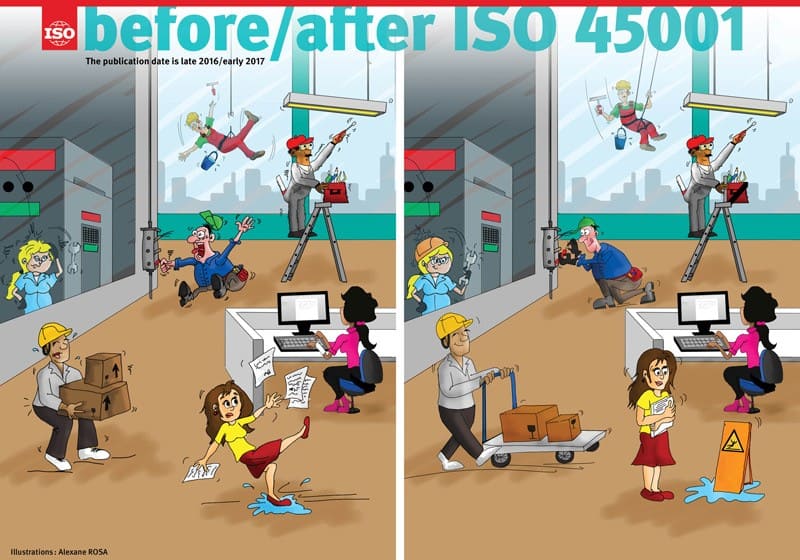

The International Organization for Standardization (ISO) normally reviews standards every 5 years to ensure they remain relevant to changing market requirements. ISO 45001 is based on OHSAS 18001 – the former reference standard for occupational health and safety management systems – but it is a new and distinct standard, not a revision or update, and organisations will have three years to transition to it. Organisations will therefore need to rethink their current approach and practices to maintain compliance with this new standard.
ISO 45001 aims to provide safety not only for employees but also for visitors and customers who have direct contact with organisations. To achieve this impact, it is essential to control the factors that can result in illness, injury or even death, by mitigating adverse effects on the physical, cognitive and mental health of individuals.
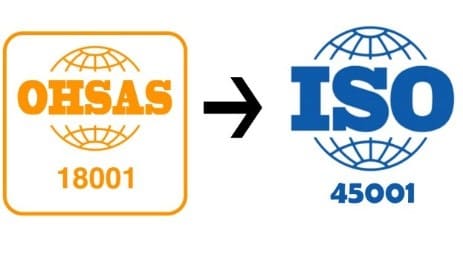
WHAT ARE THE MAJOR DIFFERENCES BETWEEN OHSAS 18001 AND ISO 45001?
ISO 45001
• Based on a process approach
• Dynamic across all clauses
• Considers both risks and opportunities relating to occupational health and safety, as well as other risks and opportunities of the management system
• Includes consideration of the views of interested parties
OHSAS 18001
• Based on procedures
• Not dynamic
• Deals exclusively with occupational health and safety risks
• Does not include
COMPLIANCE WITH OCCUPATIONAL HEALTH AND SAFETY (OHS) MANAGEMENT SYSTEM PRACTICES REQUIRES:
- Providing healthy and safe workplaces;
- Preventing work-related injuries and illnesses;
- Minimising risks and preventing OHS hazards by effectively complying with prevention and protection measures;
- Managing risks and opportunities relating to occupational health and safety.
- Continuously improving and optimising OHS system performance.
Key benefits of implementing a management system based on ISO 45001 include:
- Reduction of workplace incidents
- Reduced absenteeism and staff turnover, leading to increased productivity
- Lower insurance premium costs
- Creation of a health and safety culture, encouraging employees to take an active role in their own occupational health and safety
- Strengthened management commitment to proactively improving occupational health and safety
- Ability to meet legal and regulatory requirements
- Enhanced organisational reputation
- Improved staff morale