
Present in human activities since the very beginning of history, risk has influenced the outcomes of actions and the achievement of objectives. Risk management, as an important component of strategic management, is designed to deal with an appropriate response to risks, using various analytical and operational methods and tools for the purpose of identifying, prioritising and adopting appropriate measures to avoid losses and achieve the organisation’s objectives.
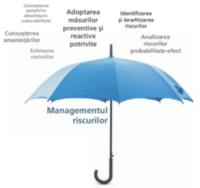
Risk management allows organisations/companies to try to prepare for unexpected events, minimising risks and additional costs before they occur.
Importance
By implementing a risk management plan and taking into account the diversity of potential risks or events before they occur, an organisation can save money and protect its future.
This is because a robust risk management plan will help a company establish procedures to avoid potential threats, minimise their impact should they occur, and cope with the results.
This ability to understand and control risk allows organisations to be more confident in their business decisions. In addition, strong corporate governance principles that focus specifically on risk management can help a company achieve its objectives.
Other important advantages of risk management include:
- Creates a safe working environment for all staff and customers.
- Increases operational stability while also reducing legal liability.
- Provides protection from events that are harmful to both the company and the environment.
- Protects all people involved and assets from potential damage.
- Helps establish the organisation’s insurance needs to save on unnecessary premiums.
Risk management strategies and processes
All risk management plans follow the same steps that combine to make up the overall risk management process:
- Establishing the context.
- Identifying risks.
- Analysing risks.
- Evaluating risks.
- Reducing/treating risks.
- Monitoring risks.
- Communication and consultation.
Risk management strategies should also try to answer the following questions:
‼ What can go wrong? Consider both the workplace and individual tasks.
‼ How will it affect the organisation? Consider the likelihood of the event and whether it will have a large or small impact.
‼ What can be done? What measures can be taken to prevent the loss? What can be done to recover if a loss occurs?
‼ If something happens, how will the organisation pay for it?
Risk management standards have been developed by a number of organisations, including the National Institute of Standards and Technology (NIST) and the International Organization for Standardization (ISO).
These standards are designed to help organisations identify specific threats, assess unique vulnerabilities to determine their risk, identify ways to reduce those risks, and then implement risk reduction measures in line with organisational strategy.
ISO 31000 is designed to “increase the likelihood of achieving objectives, improve the identification of opportunities and threats, and allocate and use resources effectively for risk treatment”, according to the ISO website.
ISO standards and others like them have been developed worldwide to help organisations systematically implement best practices in risk management. The ultimate goal of these standards is to establish common frameworks and processes for the effective implementation of risk management strategies.